You just moved into a house in Old Brooklyn and there's no telling how many copies of the keys are floating around. Or your roommate moved out, or you lost a key ring somewhere between the car and the front door. In all of those situations, the fastest and cheapest way to make your home safe again is usually not a new lock — it's a rekey.
Here's what rekeying actually involves, when it makes sense in Cleveland, and how the process works from the phone call to the finished job.
What rekeying means
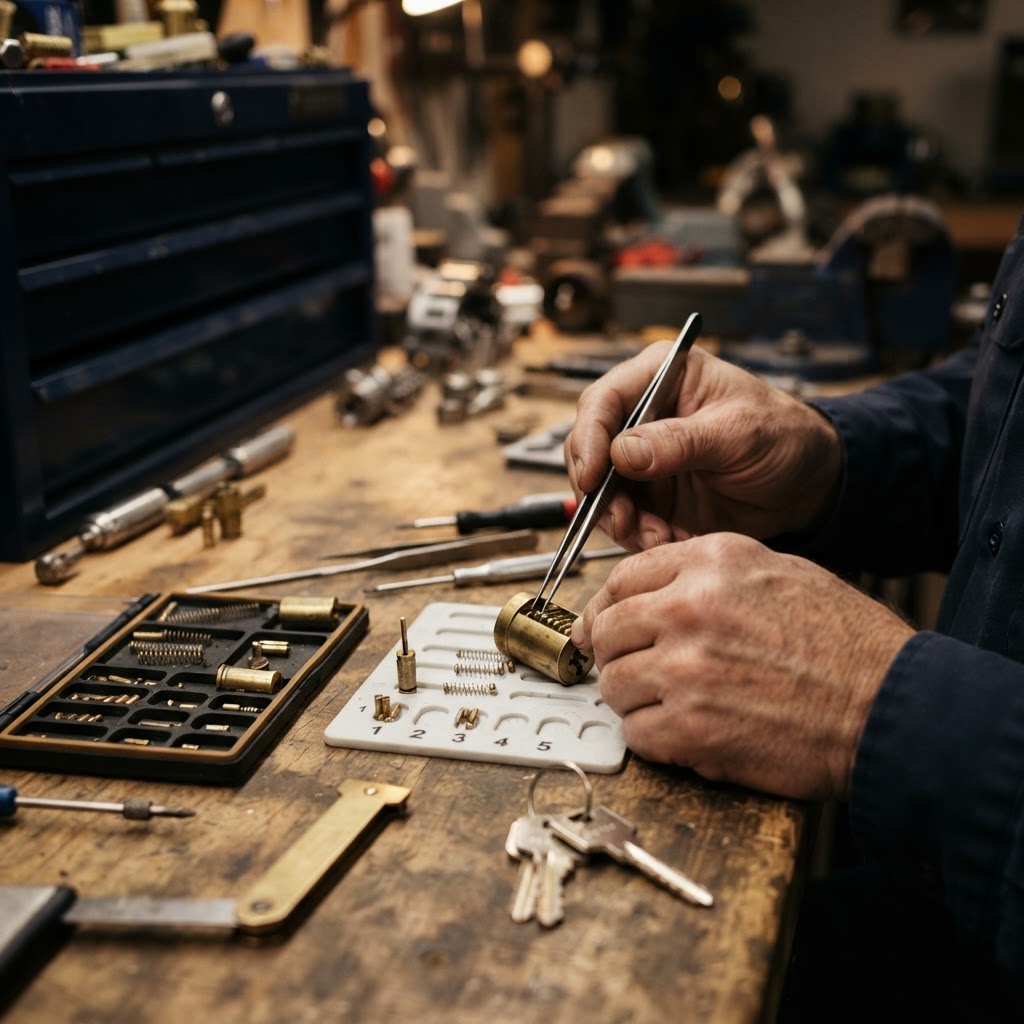
Every pin-tumbler lock has a set of small pins inside the cylinder that only release when the right key lifts them to the right height. Rekeying means swapping those pins so the lock answers to a new key while everything else — the deadbolt, the knob, the finish, the door hardware — stays exactly where it is.
Practically, that gives you three things:
- The old keys stop working. Every copy, wherever it is, becomes useless.
- You keep your existing hardware. No new holes, no new finish to match, no landlord approval for replacing fixtures.
- All your doors can share one key. A locksmith can rekey several locks to the same key so you carry one key instead of four.
Rekeying is not the same as replacing a lock, and it's also not the same as picking a lock. Nothing is broken and nothing is forced — the cylinder is taken apart, re-pinned, tested, and put back.
When rekeying is the right call
Rekeying is the standard answer in these situations:
- You just bought or rented a home. You have no idea who kept a key — the previous owner, a contractor, a neighbor, a cleaning service. This is the number one reason people rekey.
- A key went missing. A lost key with no address attached is a low risk; a lost key with a wallet, a piece of mail, or a visible address is a high one. Either way, rekeying turns a maybe into a no.
- Someone moved out. Roommate, partner, adult child, subletter. Rekeying is far cheaper than replacing locks across the property.
- A break-in or attempted break-in happened. Even if the lock still works, it may be damaged internally or its key may be compromised.
- You have inherited a property or taken over management of a rental. Each unit should turn over on a fresh key between tenants.
- You have too many keys on your ring. One-key rekeying across the front door, back door, and garage entry is a small job with a real daily payoff.
When replacing is the better choice
Rekeying preserves your lock, so it only helps if the lock is worth keeping. We recommend replacement when:
- The lock is damaged — a bent cylinder, a deadbolt that doesn't throw fully, a key that has to be jiggled to work.
- The hardware is builder-grade or very old and no longer has the strength or the anti-pick features you want at an entry door.
- The cylinder is non-rekeyable (some smart locks and certain proprietary systems use sealed or electronic cylinders).
- You want an upgrade — a Grade 1 deadbolt, a keypad, or a smart lock. In that case the new lock is the rekey.
If you're not sure which camp your lock falls into, that's a normal question. An on-site look takes a minute and saves you from paying to rekey a lock that should have been retired.
What rekeying costs in Cleveland
Rekeying is consistently less expensive than replacement, because you're keeping the hardware and paying for time and parts rather than a new lock. The total depends on how many cylinders are involved, whether they're standard or high-security, and whether you want them keyed alike or keyed differently.
You can see our current rates on the pricing page, and we'll always quote you the full price before any work starts — no per-lock surprises added at the end.
How the process actually goes
- You call or text. Tell us how many doors and what kind of locks — a photo of the lock face and the edge of the door is genuinely helpful, since it identifies the hardware.
- We confirm the price up front. Count of cylinders, keyed alike or not, and whether any hardware needs attention.
- We come to you. Most residential rekeys are a same-day job, and emergency calls are answered 24 hours a day.
- The cylinders come apart and get re-pinned. Each lock is tested with the new key several times before it goes back on the door.
- You get new keys and a working lock. We cut the keys on site and hand them over — how many copies you want is your call, and every extra copy at that moment is cheaper than a return trip later.
The work per cylinder is quick. A normal house call for a couple of doors is measured in minutes, not hours.
A few practical notes
- Rekey while you can still get in. If you're locked out, that's a lockout call first — the rekey can happen right after, in the same visit.
- Ask for keyed-alike, not a pile of keys. If your front, back, and side doors are on different keys, have them rekeyed to one key now instead of carrying three.
- Keep one spare off-site. A key at a trusted neighbor's or in a lockbox beats hiding one under a mat, which is the first place anyone looks.
- Consider a deadbolt. If the only lock on your entry door is a spring latch in the knob, rekeying it locks a weak point. Adding a deadbolt at the same visit is the better version of the same job.
- Landlords: rekeying between tenants is normal maintenance and protects you as much as the tenant. Document the date each unit was rekeyed.
The bottom line
If the locks themselves are healthy, rekeying is the fastest, cheapest way to make sure the only keys that open your home are the ones in your hand. If the hardware is tired or you want an upgrade, replacement does more for the same visit.
Quick Unlock Locksmith Cleveland handles rekeys, lock changes, and lockouts across Cleveland and 30+ surrounding suburbs — same day for most jobs, and around the clock for emergencies. Call or text (216) 860-2002 and we'll tell you exactly what your doors need before we start.
Need a Locksmith in Cleveland?
Available 24/7 for emergencies, lock changes, and lockouts.